Ouvrages
Ouvrages de tous horizons, avec une attention particulière et assumée pour la pensée de droite
Ouvrage
Best-seller d’un anthropologue américain et théoricien anarchiste influent, initiateur d’Occupy Wall Street en 2011, David Graeber propose dans ce livre une lecture qui contredit le récit économique classique : selon lui, le crédit précède la monnaie et la dette structure depuis toujours nos systèmes économiques et nos rapports sociaux, bien avant le troc. Il montre aussi que nombre de nos concepts moraux – culpabilité, pardon, rédemption – trouvent leur origine dans les conflits antiques autour de la dette. L’ouvrage explore les alternances historiques entre sociétés de crédit et d’argent métallique, évoque les jubilés de dettes de l’Antiquité et interroge enfin la morale même du remboursement, en contestant l’idée que toute dette doive nécessairement être honorée.
"[A] magnificent history of money and finance." – New York Times Book Review "Convincingly makes the case that finance is a change-maker of change-makers." – Financial Times In the aftermath of recent financial crises, it's easy to see finance as a wrecking ball: something that destroys fortunes and jobs, and undermines governments and banks. In Money Changes Everything, leading financial historian William Goetzmann argues the exact opposite – that the development of finance has made the growth of civilizations possible. Goetzmann explains that finance is a time machine, a technology that allows us to move value forward and backward through time; and that this innovation has changed the very way we think about and plan for the future. He shows how finance was present at key moments in history: driving the invention of writing in ancient Mesopotamia, spurring the classical civilizations of Greece and Rome to become great empires, determining the rise and fall of dynasties in imperial China, and underwriting the trade expeditions that led Europeans to the New World. He also demonstrates how the apparatus we associate with a modern economy – stock markets, lines of credit, complex financial products, and international trade – were repeatedly developed, forgotten, and reinvented over the course of human history. Exploring the critical role of finance over the millennia, and around the world, Goetzmann details how wondrous financial technologies and institutions – money, bonds, banks, corporations, and more – have helped urban centers to expand and cultures to flourish. And it's not done reshaping our lives, as Goetzmann considers the challenges we face in the future, such as how to use the power of finance to care for an aging and expanding population. Money Changes Everything presents a fascinating look into the way that finance has steered the course of history.
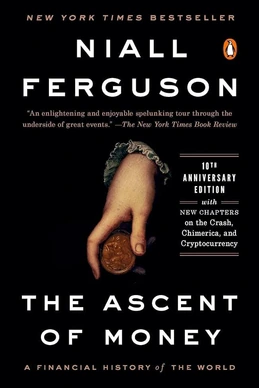
Niall Ferguson retrace l'histoire de la finance depuis ses origines en Mésopotamie antique jusqu'aux crises contemporaines, en démontrant que l'évolution de la monnaie, du crédit et des instruments financiers constitue le fil rouge essentiel de l'histoire humaine, souvent plus déterminant que les guerres, les révolutions ou les avancées technologiques. Le livre est structuré autour des principaux piliers de la finance moderne : le chapitre sur la monnaie et le crédit explore les débuts du troc, l'invention des pièces, l'essor des banques en Italie du Nord (Médicis) et les bulles spéculatives comme celle de John Law au XVIIIe siècle ; les obligations (bonds) sont analysées via leur rôle dans le financement des États et des guerres (Rothschild finançant Napoléon) ; les actions et marchés boursiers sont illustrés par les premières compagnies à capitaux (hollandaises) et les grandes bulles (South Sea, dot-com) ; l'assurance et la gestion du risque remontent aux origines romaines et aux loteries pour couvrir les risques maritimes ou incendies ; un chapitre sur l'immobilier met en lumière l'importance de la propriété privée pour la démocratie et les bulles immobilières pré-2008 ; enfin, Ferguson examine la « planète finance » globale, où la financiarisation accélérée propulse des pays comme la Chine et l'Inde hors de la pauvreté, tout en générant inégalités et crises récurrentes. L'auteur insiste sur le fait que la finance n'est pas un mal nécessaire mais le moteur de progrès, même si elle reste fragile, cyclique et sujette aux excès humains, et que comprendre son ascension permet de mieux saisir pourquoi les sociétés prospèrent ou s'effondrent.
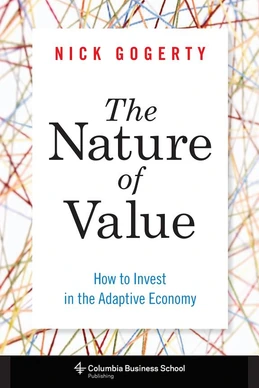
Using evolution as the template to understand growth, The Nature of Value takes a first-principles approach to explore the parallels between economic and ecological systems. Not only does Gogerty show how value is born out of tiny sparks of adaptive innovation, but he also explores the full scope of the economy as a complex network. He borrows from an array of disciplines – including anthropology, psychology, ecology, physics, sociology, and ethics – and, most revealing of all, examines how evolution's processes can help investors avoid risk and improve their allocation decisions. Starting with a look at how innovation creates value for firms, Gogerty considers the economic niches where companies compete and explores how they can create defensive moats to enhance their ability to survive. Throughout the book, Gogerty demonstrates how this ecological understanding of the economy can help allocators improve their performance, supporting his arguments with extensive data and years of practitioner experience from scientific, social, and economic disciplines. Gogerty's practical takeaways, couched in vivid explanations and accompanied by intuitive illustrations, help investors of all backgrounds gain fresh insight into the behavior of corporations and the economy in general.
La moitié des Français expriment un mal-être au travail. Une organisation néo-taylorienne soumise au rendement financier est en train de détruire notre monde commun. Cette machine à extraire le profit écrase le travail vivant : celui qui mobilise notre corps, notre intelligence, notre créativité, notre empathie et fait de nous, dans l'épreuve de la confrontation au réel, des êtres humains. Contre les " réformes " néolibérales du travail, on a raison de lutter. Mais pour défendre les conquêtes du salariat et prendre soin du monde, il nous faut repenser le travail. Nous avons besoin d'un souffle nouveau, d'un " avenir désirable ". La liberté, l'autonomie, la démocratie au travail, doivent être replacées au cœur de toute politique d'émancipation. La gauche politique et syndicale a trop longtemps privilégié le pouvoir d'achat au pouvoir d'agir dans le travail. Paradoxalement, les innovations dans ce domaine sont d'abord venues des managers : " l'entreprise libérée " inspire des initiatives patronales souvent futiles et parfois stimulantes. Des consultants créatifs proposent des modèles " d'entreprise autogouvernée " plus audacieux que les rêves autogestionnaires les plus fous. Mais surtout, des expériences multiples fleurissent un peu partout inspirées du travail collaboratif, du care, de la construction du commun, qui sont autant d'écoles d'une démocratie refondée. Et si on libérait le travail, vraiment ? C'est possible : ce livre en fait la démonstration !
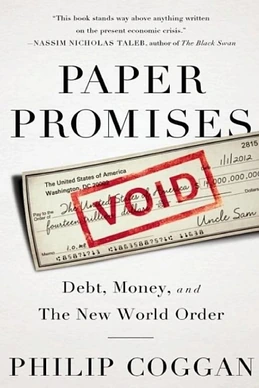
Winner of the Spear's Best Business Book Award Longlisted for the 2012 Financial Times and Goldman Sachs Business Book of the Year Award For the past forty years western economies have splurged on debt. Now, as the reality dawns that many debts cannot be repaid, we find ourselves again in crisis. But the oncoming defaults have a time-worn place in our economic history. As with the crises in the 1930s and 1970s, governments will fall, currencies will lose their value, and new systems will emerge. Just as Britain set the terms of the international system in the nineteenth century, and America in the twentieth century, a new system will be set by today's creditors in China and the Middle East. In the process, rich will be pitted against poor, young against old, public sector workers against taxpayers and one country against another. In Paper Promises, Economist columnist Philip Coggan helps us to understand the origins of this mess and how it will affect the new global economy by explaining how our attitudes towards debt have changed throughout history, and how they may be about to change again.
Page 2 / 2 - 6 affichés sur 30